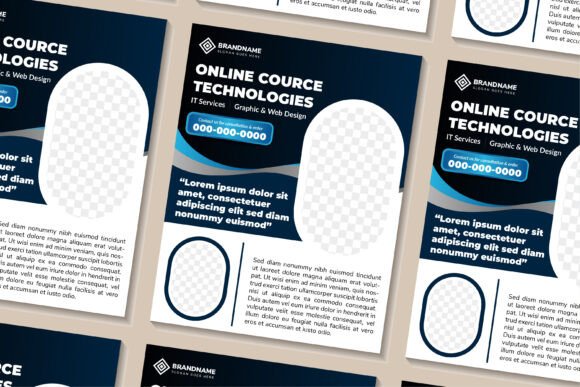
Online Course Vertical Flyer: Graphics and Print Templates
As a brand designer, I often seek out high-quality graphic design assets that can elevate small business branding without overwhelming the creative process. The Online Course Vertical Flyer is one such asset that offers versatility and clarity for local businesses looking to build a strong visual identity.
First Impressions: A Modern and Professional Mood
The Online Course Vertical Flyer immediately conveys a sense of modernity and professionalism. Its clean layout, with blue and black color combinations on a white background, suggests a tech-savvy, organized approach. This style aligns well with educational platforms, digital product launches, or any business aiming to project a polished, professional image.
The use of isolated elements on a white space gives it a minimalist feel, making it ideal for brands that want to focus on clarity rather than clutter. It’s not overly decorative, which means it can easily adapt to different brand personalities—whether you’re targeting a handmade business or a sleek boutique store.
Real-World Applications for Local Businesses
When working on a real local business project, such as a new artisanal bakery or a small skincare brand, the Online Course Vertical Flyer proves to be a valuable tool. Its vertical format makes it perfect for social media graphics, website banners, and promotional materials that need to stand out in a scrollable feed or on a printed flyer.
This graphic design asset can also be used in packaging design, where it can serve as a base for product labels, hang tags, or even seasonal packaging. For a handmade soap business, for example, the flyer could be adapted into a printable design for gift boxes or informational inserts that accompany each product.
It’s also useful in logo design and brand identity projects. The clean lines and structured layout help maintain visual hierarchy, ensuring that key messages—like pricing, features, or benefits—are clearly communicated. This is especially important for small business branding, where every visual element must work together to build trust and recognition.
Supporting Business Presentation and Brand Consistency
The Online Course Vertical Flyer contributes to stronger first impressions by offering a cohesive visual language. When used consistently across marketing visuals, it helps create a more professional look that customers recognize and trust.
For a local coffee shop launching an online course on brewing techniques, this design asset could be used in both print and digital formats. As a flyer, it could be handed out at the counter; as a social media graphic, it could promote the course on Instagram or Facebook. This multi-channel approach ensures a consistent brand identity that reinforces the business’s message.
It also enhances shelf appeal when used in product packaging. For a home decor shop selling handmade candles, the flyer could be incorporated into packaging accents or promotional banners that catch the eye of potential buyers.
Where It Works Best: Versatile and Adaptable
This design asset shines in scenarios where simplicity and clarity are key. It works well as a product mockup template, allowing designers to visualize how the final product will look before printing. It’s also effective as a hero graphic for web design or editorial design projects, where it can serve as a backdrop or focal point.
For seasonal campaigns, the Online Course Vertical Flyer can be customized to reflect holidays, events, or limited-time offers. A florist, for instance, could use it as a promotional banner during a spring sale, adjusting the text and colors to match their brand aesthetic.
Its editable nature makes it ideal for social media graphics and marketing visuals, giving designers the flexibility to tailor it to specific platforms or audiences.
Where to Use It Carefully: Avoiding Overdesign
While the Online Course Vertical Flyer is highly versatile, it may not be the best choice for every situation. In formal corporate branding, where minimalism and sophistication are paramount, this design might appear too busy or colorful. Similarly, it should be used carefully on very small labels, where the details might get lost or become illegible.
For product packaging that requires a lot of information—such as ingredient lists or legal disclaimers—the flyer’s decorative elements could compete with essential text. In such cases, a simpler design would be more appropriate.
It also needs to be tested against low-contrast backgrounds or luxury minimalist brands, where excessive decoration could clash with the intended aesthetic.
Practical Designer Notes: Testing and Customization
Before using the Online Course Vertical Flyer for client work or physical product sales, it’s essential to test it in real-world scenarios. Print a mockup to see how it looks on actual packaging, check how it appears in black and white, and ensure that the text remains legible at smaller sizes.
Review the design with your brand’s color palette to confirm that it complements existing elements. Compare it with competitor packaging to ensure it stands out while still fitting within industry standards.
If the asset includes SVG or PNG files, inspect the editability to make sure it can be adjusted without losing quality. Test it with different font styles—serif, sans serif, script, or display—to find the best fit for your brand voice.
Finally, always verify the commercial license to ensure that the design asset can be used for client projects, business branding, or physical product sales without legal issues.
Conclusion: A Useful Tool for Small Business Branding
The Online Course Vertical Flyer is a practical graphic design asset that supports small business branding, product presentation, and promotional visuals. Whether you're designing for a handmade business, a food brand, or a boutique store, this print template offers a clean, modern foundation that can be adapted to various needs.
By understanding its strengths and limitations, you can leverage it effectively to enhance your clients’ brand identity, improve customer trust, and create visually compelling marketing materials. With proper testing and customization, it can become a key part of your design toolkit for local business projects.